Dog Travel Anxiety: How to Keep Your Dog Calm When Travelling
Travelling with your dog sounds wonderful, but what if your dog doesn't enjoy travelling as much as you do? Some dogs love jumping into the car and exploring new places. Others start shaking, whining or panting before the journey has even begun. And sometimes, a dog that seems perfectly relaxed at home can become anxious in an airport, hotel, or unfamiliar environment. The good news is that travel anxiety can often be improved with patience and the right preparation. The important thing is understanding why your dog is anxious rather than simply trying to make them stay quiet.
In this guide, I'll explain the signs of dog travel anxiety, what causes it, and practical ways to help your dog feel more comfortable during car journeys, flights, and overnight stays.
What Is Dog Travel Anxiety?
Dog travel anxiety is the fear, nervousness or stress a dog experiences before or during a journey. It can happen in cars, airplanes, trains or even when arriving somewhere unfamiliar. Some dogs become anxious because they associate travelling with unpleasant experiences, such as veterinary appointments. Others struggle with movement, loud noises, confinement or changes to their usual routine. Travel anxiety can also overlap with motion sickness, which makes identifying the cause particularly important.
How Can You Tell If Your Dog Has Travel Anxiety?
Dogs don't always show anxiety in obvious ways. Some bark or whine, while others become unusually quiet.
Common signs include:
Excessive panting when it's not hot
Shaking or trembling
Whining, barking, or restlessness
Excessive drooling or lip licking
Pacing or repeatedly changing position
Refusing treats they would normally enjoy
Trying to escape the carrier or vehicle
Hiding or avoiding the car
Unusually tense body language
Some dogs also vomit or develop diarrhoea during travel, although these symptoms may be related to motion sickness or another medical problem.
My tip: Pay attention to when the behaviour begins. If your dog starts trembling as soon as they see the car, anxiety may be involved. If they appear comfortable initially but become nauseous once the car starts moving, motion sickness may be contributing.
Dog Travel Anxiety vs Motion Sickness: What's the Difference?
This is one of the most important distinctions to understand. Travel anxiety is primarily an emotional response, while motion sickness is a physical reaction to movement. However, dogs can experience both at the same time.
Sign | Travel anxiety | Motion sickness |
Fear before entering the car | Common | Possible if the dog anticipates nausea |
Trembling or hiding | Common | Less typical |
Excessive drooling | Possible | Common |
Vomiting | Possible | Common |
Restlessness | Common | Possible |
Symptoms begin when vehicle moves | Possible | Common |
Refusing to enter the car | Common | Possible after previous sickness |
These signs overlap, so the table cannot diagnose the cause. If your dog regularly drools excessively, vomits or becomes unwell during journeys, speak with your veterinarian. Treating nausea may make travelling considerably more comfortable, but anti-nausea treatment doesn't necessarily resolve anxiety.
How to Help a Dog With Travel Anxiety
There isn't one solution that works for every dog. However, the following approaches can help many dogs become more comfortable with travelling.
Start with very short, positive experiences
If your dog is afraid of travelling, don't begin with a long journey. Start with something much simpler, such as spending a few minutes near a parked car. Reward your dog for remaining relaxed, and gradually work towards sitting inside the vehicle, starting the engine and eventually taking a very short drive. Only move to the next step when your dog is comfortable with the previous one. For a particularly anxious dog, progress might take weeks or even months.
Make the carrier a familiar, comfortable place
If your dog travels in a carrier, introduce it at home long before the journey. Leave it open in a familiar room and place comfortable bedding inside. Encourage your dog to explore it voluntarily using treats or toys. Once they're happy resting inside, gradually practise closing the carrier for brief periods. Avoid forcing your dog inside or keeping them confined when they're becoming distressed. The aim is to build a positive association with the carrier, not simply teach your dog that they cannot escape it.
Bring familiar items from home
Familiar smells can make a new environment feel less intimidating. Consider bringing your dog's usual blanket, bed or favourite safe toy. This can be particularly helpful when staying in hotels or unfamiliar accommodation. However, don't overcrowd an airline carrier or include loose objects that could create a safety risk.
Keep your dog's routine as consistent as possible
Dogs often feel more comfortable when they know what to expect. Try to maintain familiar feeding, walking and sleeping routines during your trip. Allow enough time for toilet breaks, rest and access to drinking water. Avoid scheduling too many activities immediately after a long journey.
Give your dog a quiet place to rest
Busy airports, crowded streets and unfamiliar accommodation can be overwhelming. If your dog seems uncomfortable, move somewhere quieter when possible. In a hotel or rental apartment, create a resting area with their familiar bedding. Don't force your dog to interact with unfamiliar people or animals when they're showing signs of stress.
Reward calm behaviour without forcing interaction
Positive reinforcement can help your dog build better associations with travelling. Offer praise, treats or gentle attention when your dog is comfortable. If your dog is too anxious to accept food, that's often a sign the situation is too difficult at that moment. Reduce the intensity of the experience rather than pushing forward.
Try to start as young as possible
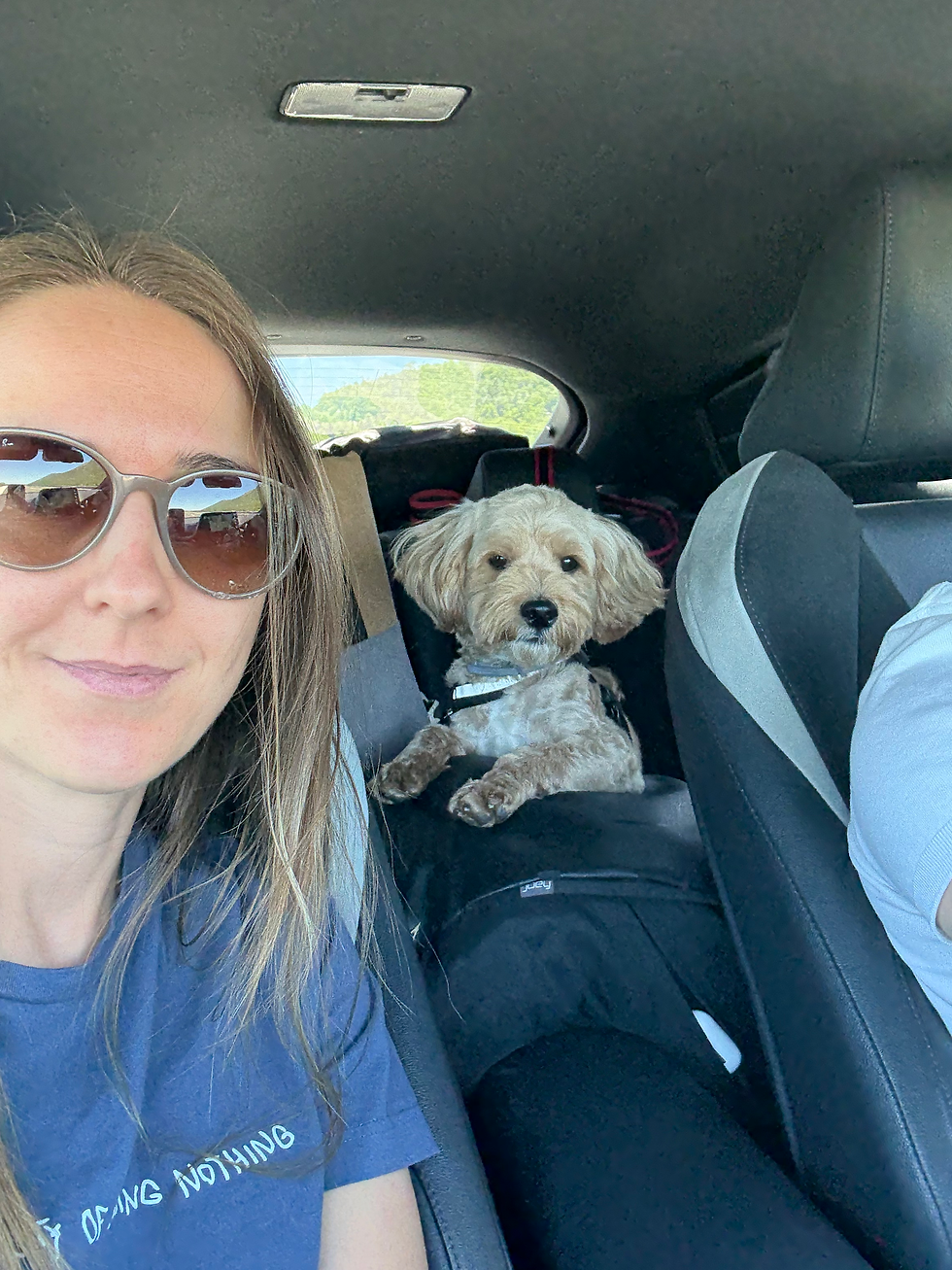
What helped me personally a lot was starting young. My partner and I are very frequent travelers, and when we adopted Rio, we knew we would want to take him with us as much as possible. So we knew we needed to get him used to car rides and place changes quickly. We started with frequent small road trips every weekend, 1 to 2 hours long, to go on small hikes. This helped him get used to the car and have it as his new normal. He did vomit the first few times in the car while driving, but after a couple of times the vomiting stopped, and he started to get more comfortable in the car. Crate did not work for us, we learnt quickly that he is much more content just being strapped and being able to move around a bit. That way he could change and find a more comfortable position. So I believe everyone needs to try different things in the car to see what works best. I believe dogs that are crate trained might find being in a crate as their safe space.
If you are facing difficulties with traveling with a dog, don't give up. On our first longer ride (2 hours) Rio had diarrhea; he vomited and had a little cry. 6 months later, we crossed Europe in 9 days, some days driving up to 8 hours. Patience and care!
How to Calm an Anxious Dog During Car Travel
Car anxiety is particularly common because dogs can associate the vehicle with movement, unfamiliar noises or unpleasant destinations. If your dog becomes anxious during car rides, try the following gradual approach.
Step-by-step car anxiety training
Step 1: Approach the parked car. Let your dog explore the area around the vehicle without requiring them to enter.
Step 2: Sit inside without driving. Once your dog is comfortable, practise sitting in the stationary car with the engine off.
Step 3: Introduce the engine. Start the engine briefly while the car remains parked. Reward relaxed behaviour.
Step 4: Take a very short drive. Begin with a short journey, returning home before your dog becomes overwhelmed.
Step 5: Gradually increase the distance. As your dog becomes more comfortable, extend the journey and occasionally visit somewhere enjoyable, such as a familiar walking area.
Some dogs progress quickly, while others need considerably more time. If your dog shows signs of distress at any stage, return to an easier step.
Additional tips for anxious dogs in cars
Use a properly secured travel crate or suitable dog car restraint.
Keep the car comfortably ventilated and at an appropriate temperature.
Drive smoothly, avoiding sudden braking and sharp turns.
Plan regular breaks on longer journeys.
Avoid loud music or unnecessary stimulation.
Never leave your dog unattended in a parked car.
If your dog suffers from motion sickness, ask your veterinarian about appropriate treatment rather than assuming that behavioural training alone will solve the problem.
How to Help a Dog With Anxiety When Flying
Flying presents different challenges from driving. Your dog may experience unfamiliar airport sounds, crowds, long periods inside a carrier, and changes to their usual routine. Unlike a car journey, you generally cannot stop the flight or take your dog outside whenever they become uncomfortable. This makes preparation particularly important.
Before the flight
Start carrier training well in advance. Once your dog is comfortable resting inside the carrier at home, practise carrying it, walking through busier environments and sitting quietly with the carrier closed. For dogs that are particularly sensitive to noise, gradual exposure to everyday background sounds may help. Choose a direct flight when practical, and avoid unnecessary long layovers.
At the airport
Allow plenty of time for check-in and security. Find a quieter waiting area when possible, and check whether the airport has designated pet relief facilities. Keep your dog securely inside their carrier where required. If your dog becomes distressed, avoid repeatedly opening the carrier in crowded spaces.
During the flight
Most airlines require ordinary pet dogs to remain inside their carriers throughout the flight. Speak calmly to your dog if they need reassurance, while following the airline's instructions. If your dog becomes seriously distressed, notify the cabin crew. For dogs with severe anxiety or an inability to tolerate confinement, flying may not be suitable without further veterinary and behavioural assessment.
For more preparation advice, see my guide: Flying With a Dog for the First Time: Preparation & Packing Checklist.
Can Dogs Get Anxious in Hotels and New Places?
Yes. Even dogs that travel comfortably in cars or airplanes can become anxious when staying somewhere unfamiliar. A new hotel or rental apartment contains different smells, sounds, and routines. Some dogs settle almost immediately, while others need more time.
How to help your dog settle into new accommodation
Let them explore calmly. Allow your dog to investigate the room at their own pace while keeping them supervised.
Bring familiar bedding. Their usual blanket or bed can create a more recognisable resting space.
Keep their routine. Try to maintain familiar meal times, walks and sleeping arrangements.
Avoid overwhelming activities. Give your dog time to rest before heading out to busy attractions or restaurants.
Be careful about leaving them alone. A dog that is comfortable alone at home may react differently in an unfamiliar room.
If your dog has separation anxiety, travelling can make the situation more challenging. Don't assume they will be comfortable being left alone in a hotel simply because they're used to staying home alone.
Do Calming Products Actually Work for Dogs?
There are several products marketed for dog anxiety, but their effectiveness varies. Some may help certain dogs feel more comfortable, while others have limited scientific evidence behind them.
Product | What to know |
Calming pheromone sprays or collars | May help some dogs; evidence is mixed |
Anxiety wraps or pressure vests | Some dogs find them comforting, but results vary |
Familiar blankets and bedding | Can provide a recognisable resting environment |
Calming supplements | Evidence varies; check ingredients and suitability with your veterinarian |
Prescription anxiety medication | May help certain dogs under veterinary supervision |
White noise or soft music | May reduce environmental stimulation for some dogs |
I would treat calming products as possible additions to proper preparation, not replacements for training. If your dog has significant anxiety, a veterinarian or qualified behaviour professional can help identify the most appropriate approach.
Should You Give Your Dog Medication for Travel Anxiety?
Sometimes medication can be appropriate, particularly for dogs with significant travel anxiety. However, it should only be considered with veterinary guidance. There is an important difference between medication that reduces anxiety and medication that simply makes a dog sleepy. A dog that appears quiet because of sedation may still be frightened. For air travel, routine sedation is generally discouraged because it can affect breathing, circulation and the dog's ability to respond normally. If medication is being considered, your veterinarian should assess your dog's health, the type of journey and any airline restrictions. Never give your dog human anxiety medication or sleeping tablets without veterinary instructions.
When Should You Seek Professional Help?
Some dogs need more support than simple travel preparation. Consider speaking with your veterinarian or a qualified reward-based behaviour professional if your dog:
Becomes extremely distressed before or during travel
Cannot tolerate being inside a carrier
Regularly vomits or becomes unwell during journeys
Tries desperately to escape from the car or carrier
Shows worsening anxiety despite gradual training
Has separation anxiety that makes overnight travel difficult
A veterinarian can also help rule out pain, nausea, or other medical conditions that may be contributing to the behaviour. The goal isn't to force your dog to tolerate travelling. It's to help them feel genuinely more comfortable, and to recognise when a particular journey may not be suitable.
Travelling with a dog should be enjoyable for both of you, but not every dog feels comfortable with unfamiliar places, long car journeys or flying. The most useful thing you can do is understand what's causing your dog's anxiety and work on it gradually, rather than expecting them to get used to everything immediately. Start small, reward positive experiences, and give your dog time to adjust. And if travelling simply isn't something your dog enjoys, that's okay too. Sometimes the best travel decision is choosing the option that keeps your dog happiest and most comfortable.
Frequently Asked Questions
Why does my dog get anxious when travelling?
Dogs can develop travel anxiety because of unfamiliar environments, movement, loud noises, confinement or previous negative experiences. Some dogs also associate travelling with motion sickness or stressful destinations.
How can I calm my dog during a car ride?
Start with gradual car training, beginning with a parked vehicle and progressing to short journeys. Use a secure restraint, keep the car comfortable and reward relaxed behaviour. If your dog becomes nauseous, speak with your veterinarian.
How do I calm my dog before a flight?
Introduce the airline carrier well in advance, practise short periods of confinement, maintain familiar routines and avoid overwhelming environments. Dogs with significant anxiety should be assessed by a veterinarian before flying.
Can dogs grow out of travel anxiety?
Some dogs become more comfortable with travel through positive experiences and gradual training. However, anxiety doesn't always disappear on its own, and repeated stressful journeys can make it worse.
Why does my dog shake in the car?
Shaking can be a sign of anxiety, fear, nausea or physical discomfort. If it happens regularly, especially alongside drooling or vomiting, a veterinary assessment can help identify the cause.
Do calming sprays work for dogs during travel?
Dog-appeasing pheromone products may help some dogs, but results vary and the evidence is mixed. They are best considered as additional support rather than a complete solution for travel anxiety.
Can I give my dog something to make them sleep while travelling?
Don't give your dog sleeping medication or sedatives without veterinary guidance. Routine sedation is particularly discouraged during air travel because of potential health risks.
How long does it take to train a dog with travel anxiety?
It depends on the dog's previous experiences and level of anxiety. Some dogs improve after several short sessions, while others may need weeks or months of gradual training.
Should I leave my anxious dog alone in a hotel room?
It's best not to leave a dog with separation anxiety alone in an unfamiliar hotel room without appropriate preparation. Even dogs that are comfortable alone at home may react differently in new surroundings.
Is it better to leave an anxious dog at home instead of travelling?
Sometimes, yes. If travelling causes severe distress and cannot be made comfortable with appropriate preparation, arranging care with a trusted person or suitable pet sitter may be kinder than taking your dog on the trip.