


Road-Tripping With a Dog for the First Time: Preparation & Packing Checklist

If you're planning your first road trip with your dog, you're probably wondering how much preparation you actually need. What should you pack? How often should you stop? And how do you make sure your dog is comfortable spending several hours in the car?
I've traveled across half of Europe with my dog Rio, and one thing I've learned is that road-tripping with a dog requires a little more flexibility. You can't always drive for hours without stopping, and sometimes your plans need to change depending on your dog. But that's also what I love about road trips! You have the freedom to stop somewhere beautiful, take a walk, and discover places you might otherwise have driven straight past.
Whether you're planning a weekend getaway or a longer journey across several countries, I've put together this guide to help you prepare for your first road trip with a dog, including practical tips, car safety advice, and a complete packing checklist.
1. Get Your Dog Used to Car Journeys Before the Trip
If your dog has never spent much time in a car, I wouldn't recommend making their first journey a six-hour drive. Some dogs love car rides from the beginning, while others find them stressful or experience motion sickness. The best thing you can do is start with shorter journeys and gradually build up their confidence.
Here's how I would prepare:
Start with the parked car. Let your dog explore the vehicle while it's stationary. Reward them for being relaxed.
Introduce short drives. Begin with a five- or ten-minute journey somewhere familiar.
Visit enjoyable places. Take your dog to a park or walking area so they don't associate every car ride with a veterinary appointment.
Gradually increase the distance. Once your dog is comfortable, try longer journeys with planned breaks.
Practise using their car restraint. Your dog should be comfortable wearing their travel harness or resting inside their secured crate before the actual trip.
If your dog starts shaking, drooling excessively, whining, or trying to escape, don't assume they'll simply get used to it. These can be signs of anxiety or motion sickness, and it's worth addressing them before planning a long journey. I've covered this in more detail in my guide: Dog Travel Anxiety: How to Keep Your Dog Calm When Traveling.
2. Make Sure Your Dog Is Secure in the Car
This is probably the most important thing to sort out before your first road trip. Your dog shouldn't be moving freely around the car, sitting on your lap or distracting you while driving. There are several ways to secure a dog, but not every product sold as a dog car restraint offers the same protection.
Dog car harness
A car harness is a practical option for many dogs, particularly if you want them to travel on the back seat. Look for a harness specifically designed for vehicle use, ideally with independent crash-testing evidence. Make sure it's properly fitted and compatible with the restraint system.
Important: Never attach a vehicle restraint directly to your dog's collar. Sudden braking could cause serious neck injuries.
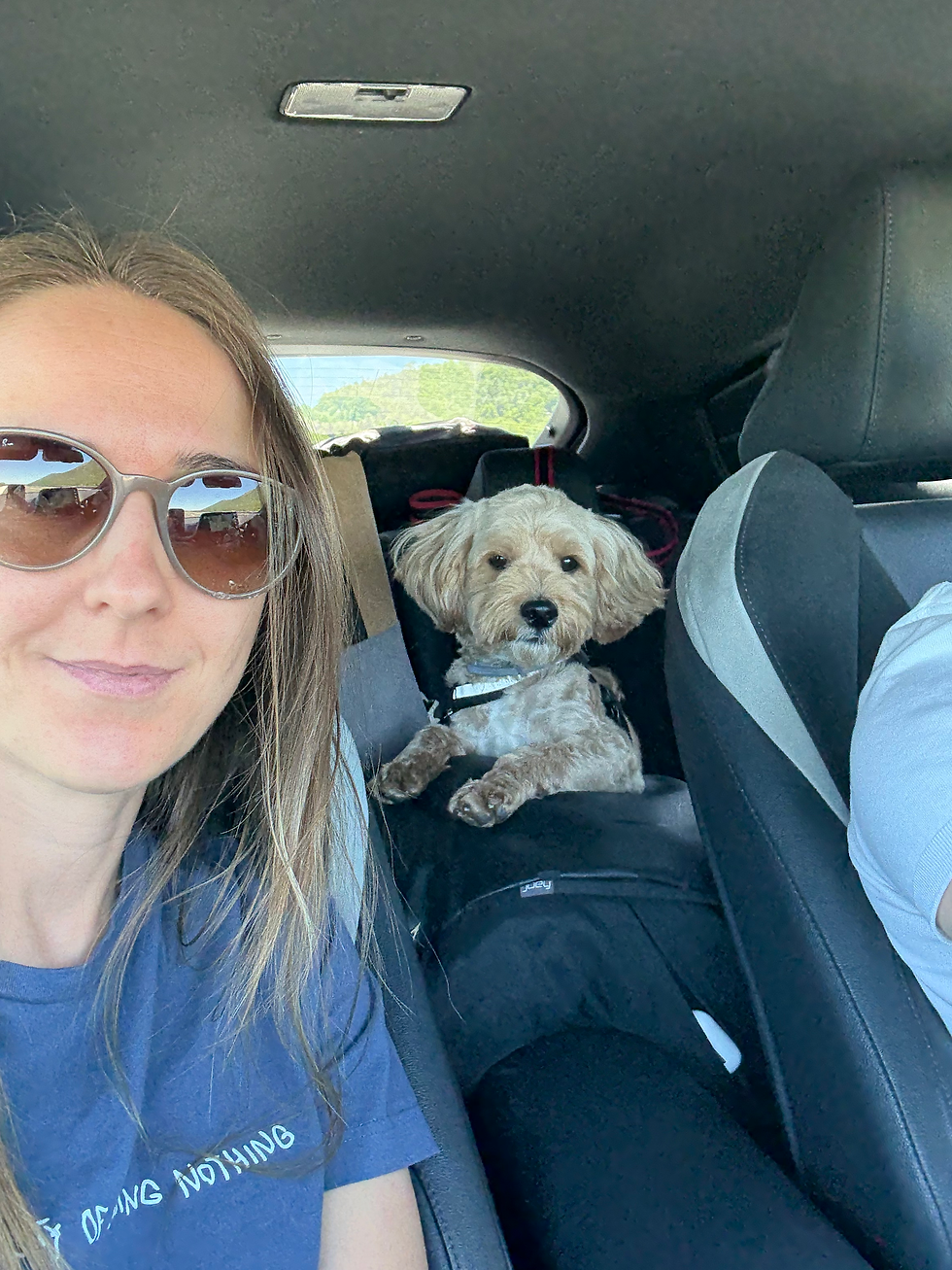
I use a dog car harness for my Rio, and we find it to be the best way for us. He is able to move around a bit but not too much to endanger himself. As he is quite curios dog and likes to look outside the window, we want to give him some space for the movements.
Dog travel crate
A travel crate can be a good option, especially for dogs that already enjoy resting in one. However, it needs to be suitable for vehicle travel and properly secured. A loose crate can become dangerous during sudden braking or an accident.
Dog car seat
You'll find plenty of small dog car seats advertised online, but I would be careful when choosing one. Many are designed primarily for comfort rather than crash protection. If you're considering a dog car seat, check whether the complete restraint system has been independently crash-tested.
My recommendation: Choose your dog's safety restraint before buying accessories such as seat covers or travel organizers. Safety should come first.
3. Plan Your Route Around Your Dog
When I'm planning a road trip with Rio, I like having the freedom to stop along the way. And I think that's one of the biggest advantages of traveling by car with a dog. Instead of focusing only on the fastest route, think about where you can stop, how long your dog will be in the car, and whether there are suitable places for walks.

How often should you stop when driving with a dog?
As a starting point, I would plan a break approximately every two hours, adjusting it to your dog's needs. Puppies, older dogs, and dogs with medical conditions may need more frequent stops.
During breaks, give your dog a chance to:
Go to the toilet.
Drink some water.
Stretch their legs.
Take a short walk.
Relax outside the car.
You don't necessarily need a long walk every time. Sometimes a short break is enough.
Look for dog-friendly stops
Instead of stopping only at motorway service stations, I would look for parks, walking trails, or quieter green spaces close to the route. Google Maps can be useful for finding these in advance. However, don't plan every minute of your journey. Leave some flexibility for unexpected stops.
Avoid driving too far in one day
Just because you can comfortably drive for eight hours doesn't mean your dog will enjoy spending that much time in the car. If you're planning a particularly long journey, consider splitting it over two days. A night in a dog-friendly hotel can make the trip more comfortable for everyone.
4. Be Careful With Food and Water Before Driving
One thing worth considering is when to feed your dog before a long journey. Some dogs experience motion sickness, particularly during winding roads or journeys with frequent stops and starts. I would avoid giving a large meal immediately before departure. However, the right feeding schedule depends on your dog's age, health, and usual routine. Puppies and dogs with certain medical conditions may need more frequent meals. If your dog regularly becomes nauseous in the car, speak with your veterinarian about feeding times and appropriate motion sickness treatment.
Don't forget drinking water
Always carry fresh drinking water and a portable bowl. Offer water during regular breaks, especially when traveling in warm weather. Don't restrict water simply to avoid toilet stops. And remember, dogs can become dehydrated more quickly in hot conditions.
5. Keep Your Dog Comfortable During the Drive
Even if your dog enjoys car rides, spending several hours in the same position can become uncomfortable. A few simple things can make a big difference.
Keep the temperature comfortable
Make sure the car has good ventilation and a comfortable temperature. Avoid placing your dog's crate or seat directly in strong sunlight for long periods. Never leave your dog unattended in a parked car. Temperatures can become dangerous very quickly, even when the weather doesn't seem particularly hot.
Bring something familiar
A familiar blanket can make your dog's travel space more comfortable. I would choose something they're already used to rather than buying completely new bedding just for the trip. Make sure it doesn't interfere with the restraint system or create an overheating risk. We take Rio sleeping blanket on all the longer car rides. We feel like it gives him a lot of emotional comfort and it just makes his spot more comfy.
Avoid unnecessary noise
Some dogs are perfectly comfortable with music and conversation, while others are more sensitive. If your dog seems nervous, keeping the environment quieter may help.
Watch for signs of discomfort
Pay attention to your dog's behavior throughout the journey. Excessive panting, drooling, restlessness, or whining can indicate stress, nausea, overheating, or another problem. If something seems wrong, stop somewhere safe and check on your dog.
6. Check That Your Accommodation Is Actually Dog-Friendly
Finding dog-friendly accommodation is usually quite easy these days, but I would never book somewhere based only on a little pet-friendly symbol. Hotels and vacation rentals can have very different policies.
Before booking, I would check:
Pet fees: Is there an additional charge per night or per stay?
Dog size restrictions: Are larger dogs accepted?
Number of dogs: Can you bring more than one?
Room rules: Are dogs allowed on furniture or beds?
Leaving dogs alone: Can your dog stay in the room unattended?
Outdoor space: Is there somewhere nearby for toilet breaks and walks?
I would also look at the accommodation's location. A beautiful hotel in the middle of a busy city might not be the most practical choice if there are no suitable walking areas nearby.
What if your dog doesn't settle in a new place?
Some dogs need time to adjust to unfamiliar surroundings. Bring their usual bedding, allow them to explore calmly, and try to maintain their normal routine. I would also avoid leaving a dog alone in unfamiliar accommodation until I knew they were comfortable and the property permitted it.
7. Check the Rules Before Crossing Borders
If your road trip involves several countries, make sure you understand the pet entry requirements before leaving. For example, traveling between EU countries is generally straightforward with a valid EU pet passport, microchip, and rabies vaccination. However, some countries require additional treatments or documents. And if you're leaving the EU, the requirements for returning can be different from those for entering your destination.
I've covered all of this in my separate guide: Road-Tripping With a Dog in Europe: Rules, Documents & Border Crossings.
8. Road Trip With a Dog: Complete Packing Checklist
Now for the part that can save you a lot of last-minute stress! I like organizing dog travel essentials into categories so it's easier to check that nothing important has been forgotten.
Documents and identification
Pet passport or required health certificate
Vaccination records
Microchip details
Any required border-entry documents
Identification tag with your phone number
Pet insurance details (if you have one)
Veterinarian contact information
Digital copies of important documents
Car safety and comfort
Properly secured dog travel harness or crate
Dog car seat cover
Familiar blanket or bedding
Sunshade, if needed
Suitable leash and harness for stops
Food and water
Enough regular dog food for the trip
Food storage container
Portable water bowl
Fresh drinking water
Familiar treats
Food bowl
Hygiene and cleaning
Waste bags
Pet-safe cleaning wipes
Paper towels
Absorbent pads, if needed
Bags for dirty items
Flea and tick prevention
For your destination
Dog bed or familiar blanket
Favorite toys
Longer leash for suitable walking areas
Muzzle, if required by local rules or transport providers
Weather-appropriate accessories
Extra waste bags
My tip: Keep a separate small bag with everything you'll need during driving breaks. Water, a bowl, leash, waste bags, and cleaning wipes should be easy to reach without unpacking the whole car. I always have one small bag with necessities with me in the car salon and a bigger one packed away with all the other stuff.
10. Common Mistakes to Avoid on Your First Dog Road Trip
There are a few things I would definitely keep in mind when planning a first road trip.
Common mistake | What to do instead |
Planning a very long first drive | Practise shorter journeys beforehand |
Letting your dog move freely in the car | Use a suitable, properly secured restraint |
Not planning enough breaks | Allow regular stops and extra time |
Feeding a large meal just before departure | Plan feeding around your dog's needs |
Forgetting water | Carry fresh water and a portable bowl |
Leaving your dog in a parked car | Take your dog with you and avoid unattended stops |
Assuming all pet-friendly hotels have the same rules | Check the property's exact pet policy |
Forgetting border requirements | Check documents before leaving |
Packing all dog essentials in the trunk | Keep a separate bag for driving breaks |
11. What to Do When You Arrive
After a long drive, I wouldn't immediately plan a busy afternoon full of activities. Your dog may need some time to stretch, relax, and become familiar with the new environment. Start with a toilet break and a short walk. Once you've checked into your accommodation, set up a comfortable resting area with familiar bedding and offer fresh water. Try to keep feeding and walking routines as normal as possible. And if your dog seems tired after the journey, let them rest. Remember, even if you've spent most of the day sitting in the car, traveling can still be tiring for your dog.

After traveling around Europe with Rio, I really think road trips are one of the nicest ways to explore new places with a dog. Of course, they're not quite the same as traveling without one. You need to think about regular breaks, dog-friendly accommodation, car safety, and all those little things that make your dog comfortable. But once you have the essentials sorted out, it becomes much easier. My biggest advice for your first road trip is not to overcomplicate things. Prepare your dog for the car, pack the essentials, allow extra time, and don't try to fit too much into one day. And most importantly, enjoy the journey! Some of the best parts of a road trip are the unexpected stops and places you discover along the way.
Frequently Asked Questions
How do I prepare my dog for their first road trip?
Start with short, positive car journeys and gradually increase the distance. Make sure your dog is comfortable with a suitable car restraint, plan regular breaks and pack their usual food, water and bedding.
How long can a dog travel in a car?
There isn't one maximum journey length that suits every dog. It depends on their age, health, temperament and comfort with traveling. Plan regular breaks, and consider splitting particularly long journeys over several days.
How often should I stop on a road trip with my dog?
A break around every two hours is a useful starting point for many adult dogs. Puppies, senior dogs and dogs with medical conditions may need more frequent stops.
Should I feed my dog before a long car journey?
Avoid a large meal immediately before departure, particularly if your dog experiences motion sickness. However, don't withhold food for extended periods without veterinary advice. The ideal schedule depends on your dog's individual needs.
What should I pack for a road trip with my dog?
The essentials include food, water, bowls, a leash, a suitable car restraint, waste bags, cleaning supplies, familiar bedding, identification, and any necessary travel documents or medication.
Where should my dog sit in the car?
A properly secured position in the back of the vehicle is generally preferable. Use a suitable vehicle restraint or secured travel crate, and check the relevant road safety laws.
Can dogs get car sick?
Yes. Motion sickness can cause drooling, nausea, vomiting and restlessness. If your dog regularly becomes unwell during car journeys, speak with your veterinarian about appropriate treatment.
How do I keep my dog calm during a long drive?
Prepare with gradual car training, use a familiar and comfortable travel space, keep the temperature appropriate and plan regular breaks. Dogs with significant travel anxiety may benefit from a veterinary or behavioral assessment.
Can I take my dog on a road trip across Europe?
Yes. Many European countries allow dogs to enter with appropriate identification, rabies vaccination, and travel documents. Requirements vary, especially when traveling outside the EU.
Is a road trip better than flying with a dog?
It depends on your dog and destination. Driving offers more flexibility for breaks and allows you to stay with your dog throughout the journey. However, some dogs experience significant car anxiety or motion sickness, so it isn't automatically the better option.
